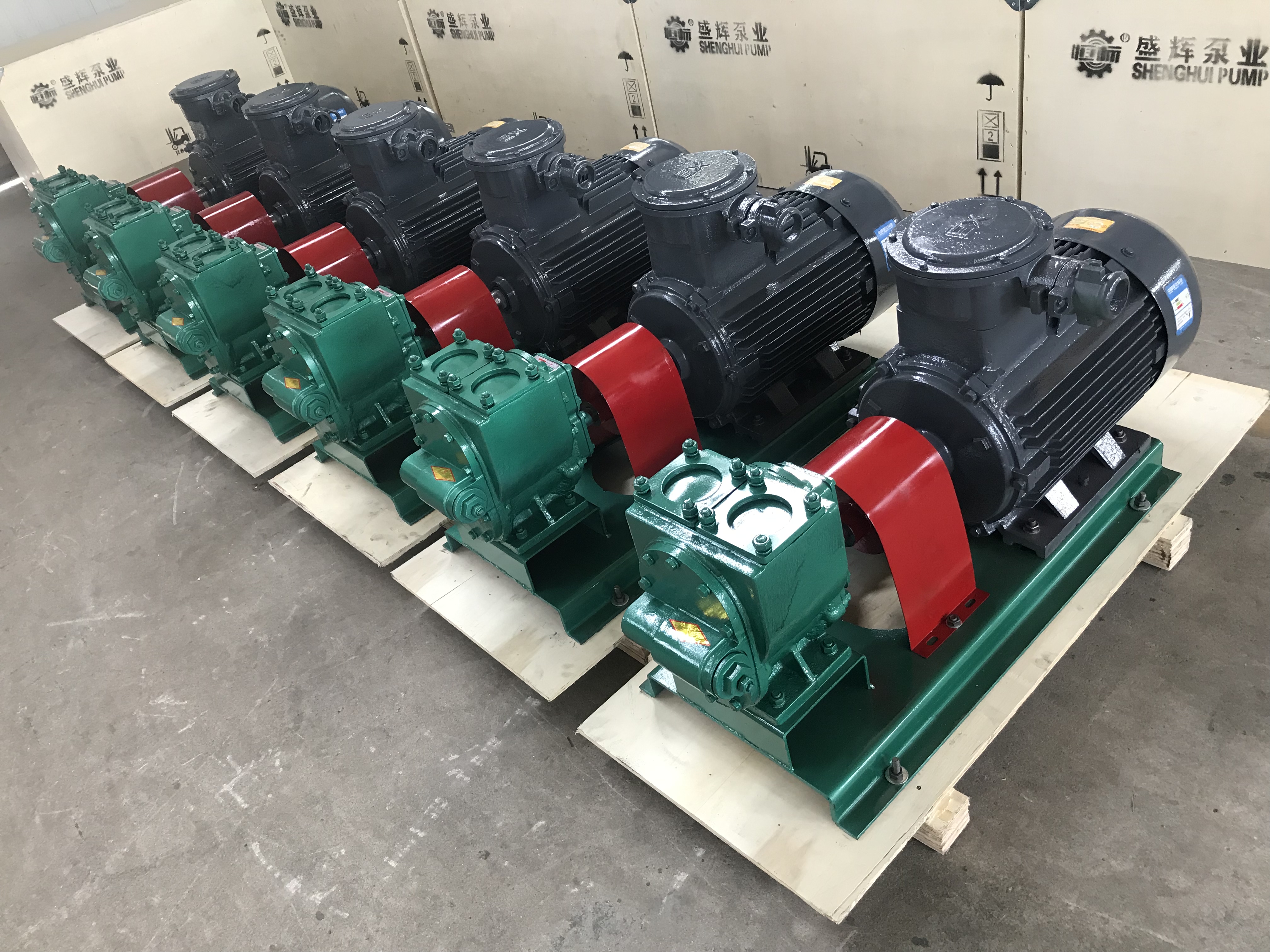
Benefits of Using YHCB Gear Pumps in Fuel Loading Operations for Tank Trucks
2026-10-12 16:23:15
Read:
Share:
In the oil transportation and storage industry, the loading and unloading of oil products requires equipment that not only has stable delivery capacity but also ensures high efficiency, compatibility with various oil products, and operational safety. The loading and unloading efficiency in oil depots, fuel distribution, and industrial oil storage directly impacts subsequent production, which in turn affects equipment operating costs and the stability of the overall production process. In response, YHCB gear pumps meet the demand for continuous oil transfer in operations like tanker truck loading and unloading, storage tank transfer, and fuel distribution, relying on their stable flow rate, reliable structure, and strong adaptability.
Unlike centrifugal pumps, which rely on the rotation of an impeller to generate kinetic energy, this equipment uses gear meshing to achieve fluid transfer. When the equipment is operating, the drive gear rotates the driven gear, creating a change in volume between the gear teeth on the suction side, which draws the oil into the pump chamber. Thereafter, the liquid is transported along the inner wall of the pump housing to the discharge side and is ultimately expelled through the meshing area of the gears. This method therefore provides continuous and stable flow for facilities requiring frequent oil loading and unloading, eliminating task delays caused by mismatches between pumping capacity and actual demand.
To prevent significant fluctuations in flow rate during the unloading of oil tankers and ensure safety throughout the process, the YHCB gear oil pump can be selected based on the viscosity of the fluid, operating temperature, and target flow rate, ensuring that its delivery capacity matches the tanker’s capacity, loading and unloading requirements, and pipeline conditions. It is important to note that the actual flow rate is also influenced by factors such as the pump’s operating pressure, rotational speed, internal leakage, and the properties of the oil, therefore, the on-site unloading speed cannot be determined solely based on the rated displacement. Meanwhile, different oils exhibit varying flow characteristics as temperature changes, with certain lubricants and high-viscosity fuel oils experiencing greater flow resistance at low temperatures, while their viscosity may decrease as temperatures rise. Since this equipment conveys liquid through the volumetric changes created by gear meshing, it can accommodate a certain range of viscosity variations in the oil, though the specific applicable range still depends on the pump’s structure, materials, rotational speed, and operating pressure. For actual loading and unloading tasks, confirm the oil type, viscosity range, and delivery temperature in advance to avoid increased motor load, insufficient flow rate, or accelerated equipment wear caused by mismatched medium conditions.
The suction line being too long, having an overly small diameter, a clogged filter, or poor sealing can all increase suction resistance and affect the pump’s liquid intake. However, bends and long runs in the discharge line can increase system resistance, causing the pump to operate under higher working pressure. For sites that require frequent connections to tanker trucks, piping should be properly configured based on inlet and outlet sizes, permissible suction conditions, and rated operating pressure to help reduce the risk of leaks and ensure smoother daily loading and unloading operations. To maintain the equipment in normal operating condition, it is necessary not only to keep the oil clean, inspect filters regularly, and replace worn parts promptly, but also to monitor the pump’s noise, vibration, and pressure to reduce the risk of unplanned downtime.
Regarding tanker truck loading operations, the YHCB oil pump can also be configured based on the storage tank location, pipeline length, loading flow rate, and system pressure requirements. During operation, the fuel flows from the storage tank into the pump via the suction line and is then delivered to the tanker through the rotation of the gears and the pump. By properly configuring the piping, valves, and control devices, the loading process is made more orderly, and the flow rate can be controlled according to actual needs. For companies that handle different batches of fuel, attention should also be paid to pipeline cleaning, medium switching, and residual liquid management to prevent the mixing of different fuels from affecting product quality. YHCB series arc gear pump utilizes a positive-displacement gear transfer design to better meet the daily fuel loading and unloading needs of tanker trucks, helping companies improve the controllability of fuel transfer and reduce unnecessary operational interruptions, while also providing a stable flow rate to ensure continuous and reliable loading and unloading operations. Nevertheless, when selecting the appropriate equipment, factors such as fluid viscosity, operating pressure, rotational speed, piping layout, sealing requirements, and actual safety conditions must be comprehensively considered to better meet production needs.