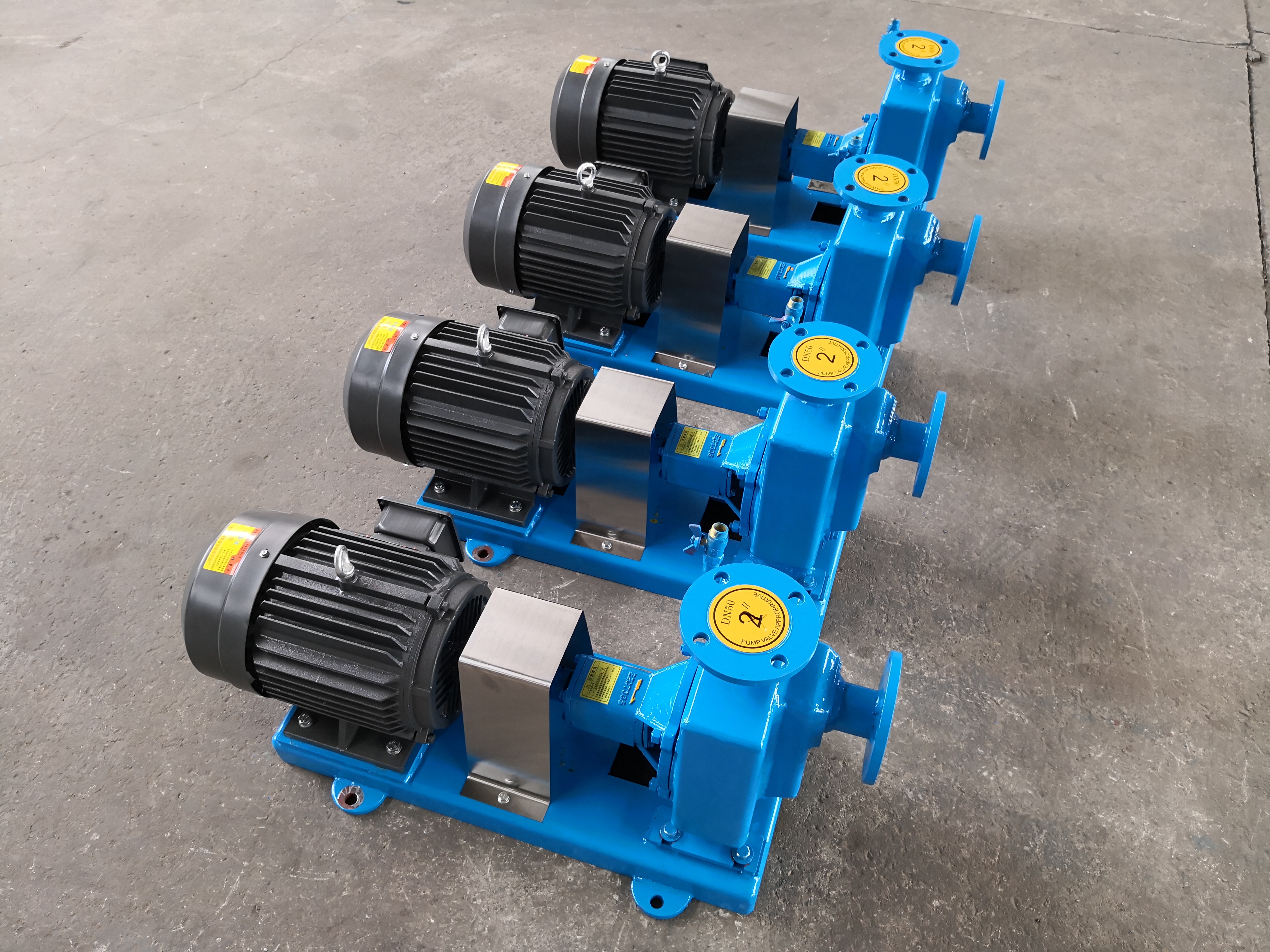
What makes the ZW Self-Priming Pumps Efficient and Reliable for Treating Wastewater?
2026-05-21 16:53:13
Read:
Share:
In fields like agricultural irrigation, industrial wastewater discharge, municipal drainage, and sewage treatment, operators often struggle with liquids containing large amounts of solid particles, long fibers, silt, and even plastic bags or other debris without effective solutions. This frequently results in clogged pumping equipment or the need for manual water filling and diversion. Nevertheless, the ZW series self-priming sewage pumps achieve stable and efficient conveyance of these media without clogging, thanks to their internal design and key components.
Traditional centrifugal pumps must be filled with water before startup; otherwise, the impeller will spin dry and fail to draw in liquid, which is often cumbersome and time-consuming in production settings. However, this series of pumps addresses this challenge by employing a unique gas-liquid mixed self-priming design and incorporating a gas-liquid separation chamber within the pump. It requires only a small amount of priming water to be introduced into the pump before startup, where the rotating impeller mixes the medium with air to form a gas-liquid mixture, which is then accelerated by the impeller and sent into the gas-liquid separation chamber. Ultimately, the air is expelled through the discharge pipe, while the liquid is recirculated into the mixture. As the air is gradually drawn out of the pump, a vacuum is created, ultimately achieving self-priming and thereby simplifying the installation and operation processes to a certain extent.
ZW horizontal centrifugal pump features a semi-open impeller design that offers wider flow channels, fewer blades, and a larger clearance between the impeller and the pump casing compared to the closed impellers found in traditional centrifugal pumps. Accordingly, when handling impurities in wastewater such as solid particles, long fibers, and sludge, this equipment not only precludes debris accumulation at the seals but also prevents the impeller from becoming entangled by fibers or debris, thereby ensuring smooth and stable flow. Concurrently, to prevent leakage when handling wastewater containing hard particles, the equipment’ s shaft seals can be made of wear-resistant materials or hard alloys to ensure long-term, stable operation. It can incorporate a cooling jacket within the pump housing or be equipped with an external circulation cooling system to utilize the circulating medium inside the pump to dissipate heat generated by the seals, thereby preventing dry running during the self-priming process and avoiding equipment damage caused by overheating, which extends the equipment’s service life.
This pump incorporates an optimized hydraulic model and flow path design for the impeller, enabling it to maintain stable performance even when actual flow rates and head fluctuate, ensuring reliable operation in continuous-duty applications such as wastewater treatment plants, municipal sewage systems, and industrial mining. The pump allows for internal cleaning without disassembling the piping, so maintenance personnel can simply open the access cover to remove debris in the event of a blockage, restoring operation in a short amount of time.
Due to its internal structure, spacious flow path design, and advanced hydraulic model, the ZW self-priming pump efficiently and reliably handles wastewater containing solid particles and long fibers in applications such as aquaculture, municipal sewage disposal, construction sites, and industrial wastewater treatment. It not only significantly reduces equipment failure and clogging rates but also substantially eases the workload on operators, making it an ideal solution for wastewater disposal in agriculture, industry, and environmental protection.