In Wastewater Treatment, How Does the Corrosion Resistance of Stainless Steel Pumps Compare to Cast Iron Pumps?
2026-09-03 15:46:32
Read:
Share:
In wastewater treatment projects in India, conveying equipment is constantly exposed to media containing salts, organic matter, acids and alkalis, particulate impurities, and chloride ions, the material of the pump body has a direct impact on the equipment’s service life and production progress. For a stationary centrifugal pump, there are significant differences between stainless steel and cast iron pump housings in terms of mechanical strength, corrosion resistance, cost, and service life. Therefore, when selecting a centrifugal pump, one should not focus solely on the product price but must consider the specific water quality conditions of the wastewater to determine the appropriate material for the equipment.
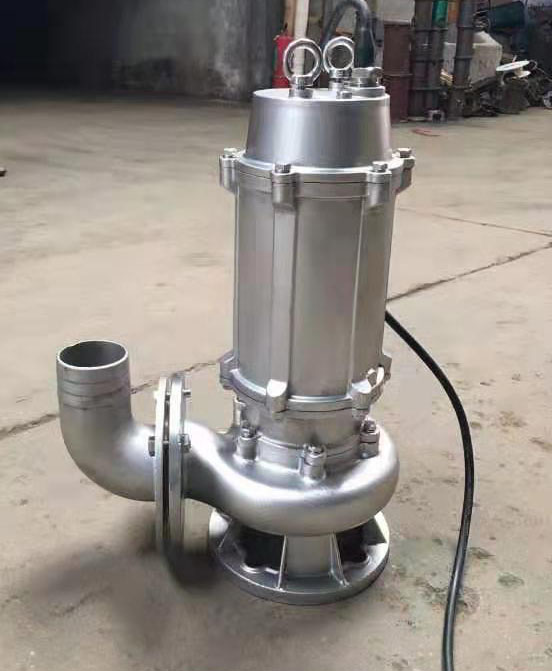
From the perspective of corrosion resistance, stainless steel pump bodies are generally superior to those made of ordinary cast iron. While cast iron relies on its own metal structure and surface to resist the working medium, the material is prone to oxidation when exposed to acidic or saline wastewater over extended periods. As the equipment operates over time, the pump housing may develop localized corrosion or pitting, which can compromise the pump’s sealing performance and long-term operational reliability. In contrast, the elements in stainless steel form a protective layer on the metal surface, providing better resistance to oxidation and corrosion than ordinary cast iron in many water treatment media. Accordingly, when handling industrial wastewater in India under long-term continuous operation, stainless steel transfer pumps will maintain a more stable operating condition and deliver more efficient pumping performance than those made of cast iron.
However, wastewater treatment projects often involve sand, silt, fibers, and other suspended solids. While stainless steel generally offers better corrosion resistance, this does not necessarily mean its wear resistance is superior to that of cast iron. For wastewater containing a large amount of particulates, using stainless steel can improve corrosion resistance, but it is easy to overlook the wear issues affecting the impeller, wear rings, and flow channels, which can similarly shorten the pump’s actual service life. Hence, when selecting materials for wastewater treatment, it is essential to consider corrosion resistance, wear resistance, and service life simultaneously.
In practical applications, when handling ordinary domestic wastewater with a pH close to neutral and low levels of chloride ions and other corrosive substances, cast iron centrifugal pumps often offer better cost-effectiveness, good castability, and superior resistance to mechanical shock. In applications involving industrial wastewater, wastewater with pronounced acidity or alkalinity, or situations requiring long-term operation in hot and humid environments, stainless steel centrifugal pumps are generally the preferred choice. This is particularly true for industrial wastewater treatment systems that are sensitive to downtime, as superior corrosion resistance can reduce the risk of maintenance and replacement caused by corrosion of the pump casing.
In Indian wastewater treatment projects, it is necessary to consider the wastewater’s pH, temperature, solids content, and primary chemical composition before determining the materials for the pump body, impeller, shaft seal, and other flow-through components. By selecting pumping equipment in this manner, it is possible to achieve an optimal balance between corrosion resistance, wear resistance, service life, and procurement costs.